 |
||
 |
 |
 |


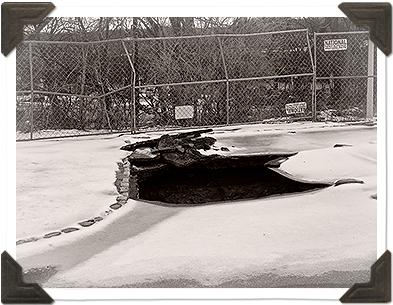
The Dolan Mine, also referred to as the Doland Mine, was opened in 1869 on land owned by Samuel Bishop Doland and operated by the Crane Iron Company. Despite early interest in the site, the mine ultimately proved to be relatively unproductive, ceasing operations permanently by 1886.
The initial development of the mine involved sinking a shaft to a depth of 120 feet. During this process, miners discovered three lean shoots of magnetite ore, but the low-grade nature of the deposits likely led to the mine's early closure. In 1883, Samuel Bishop Doland leased the property to prominent iron industrialist Joseph Wharton, who sought to revitalize operations. A second shaft was sunk to a depth of 140 feet, and plans for a tunnel were proposed. However, no record has been found confirming whether this tunnel was ever driven. The following year, approximately 1,000 tons of magnetite ore were extracted and shipped to Wharton’s iron furnaces in Port Oram (now Wharton, NJ) and Hackettstown.
In 1885, efforts to expand the mine continued with the excavation of a new slope reaching a depth of 170 feet. Miners extended drifts northeast for 23 feet and southwest for 62 feet. To improve operations, ore cars were installed for hoisting, and a 10 x 6-inch pump was placed in the original shaft. However, despite these efforts, the mine failed to yield profitable ore, and by 1886, it was permanently abandoned.
1 2

 |
 |
 |
 |
 |
 |
 |